English


































































































































































































E20 petrol does not harm vehicle engines, say IIT Kanpur researchers, auto expert agrees

Mechanical engineers find no significant drop in fuel efficiency and ‘no evidence’ that ethanol-blended petrol harms cars. Autocar India editor Hormazd Sorabjee explains why the outrage has no real basis
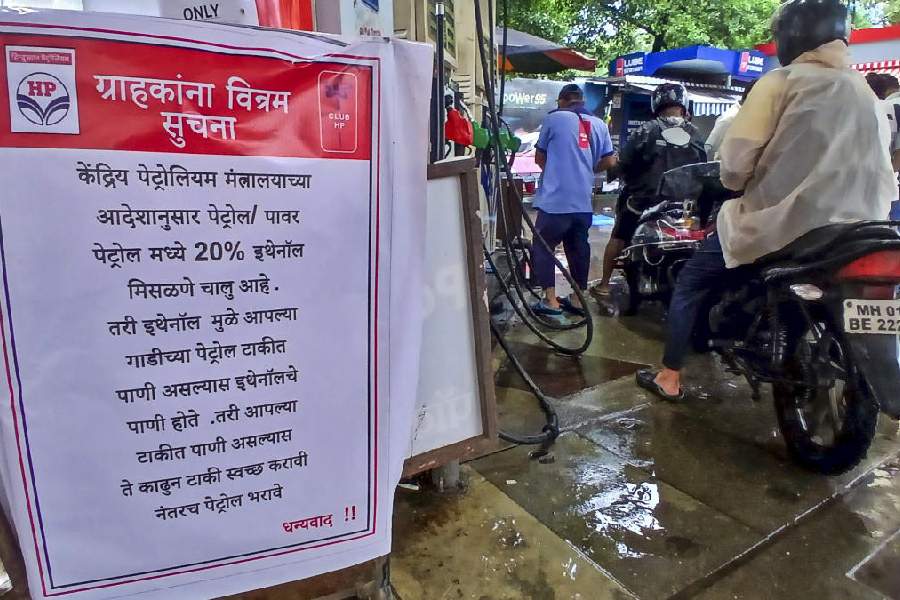
The outrage against the nationwide rollout of 20 per cent ethanol-blended petrol (E20) has been mounting amid claims of engine damage and loss in mileage and fuel economy, but auto experts say the uproar against the Narendra Modi government’s move is largely exaggerated.
IIT Kanpur researchers on Tuesday claimed that their studies found no significant drop in fuel efficiency and “no evidence” that E20 harms engines in either existing or older vehicles. And Autocar India editor Hormazd Sorabjee explained to The Telegraph Online why the outrage has no real basis.
Indian car makers had joined the Centre in defending the mandatory E20 rollout, assuring consumers that E20 fuel won’t harm engines even for older vehicles, which were originally designed to run on pure petrol or up to E10.
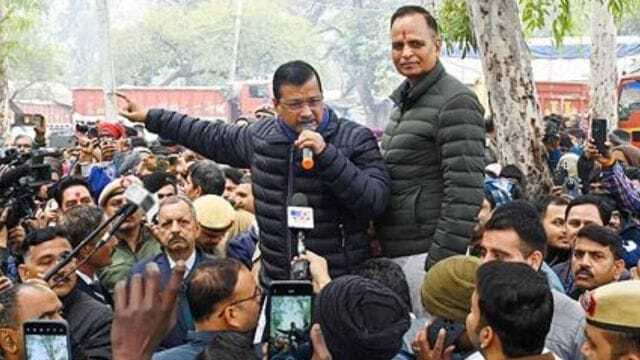
Maruti Suzuki, India’s largest carmaker, said it had serviced more than 15 million older vehicles over the past two years that were not E20-certified and found no fuel-related issues. Toyota, and Hero MotoCorp stated that tests reveal no major metal or plastic corrosion.Earlier this week, AAP chief Arvind Kejriwal in a press conference claimed a contradiction between the user manuals of old cars and what Indian automobile makers are claiming post E20 rollout.
“The manuals were written before E20 fuel,” Hormazd Sorabjee told The Telegraph Online. “There was only E10. Obviously, they are not going to rewrite the manuals.”
He explained that even if a car is E10 compliant, it doesn’t mean that it can’t run on E20 since there is always a buffer, dismissing the concern aired by Kejriwal over the language of the manual of old cars.
“If you take the example of a truck, it may have a maximum payload of 2 tonnes but it is designed to bear a load of 6 tonnes because everyone overloads. But they won’t outright tell you to overload or say nothing will happen. The way liabilities work, automobile manufacturers will always pitch the vehicle for what it was actually designed for,” Sorabjee said.
“But we have to go by the ground reality and the reality is that the damage being done to vehicles due to ethanol as people are making it out to be, is a huge exaggeration,” he said.
“Even in our experience, if you talk to normal people, not people on social media, who own cars, they don’t have a problem.”
There are, however, a couple of things to bear in mind for old car owners, specially regular maintenance, he underlined.
“Badly maintained cars can have a problem, because of how ethanol behaves. The ethanol can act as a detergent, which can dislodge a lot of impurities and jam the fuel system. But if your car is well-maintained and you use it all the time, it won’t face problems,” Sorabjee said.
Ethanol’s hygroscopic nature — the ability to attract moisture from the atmosphere — has also been a cause of concern but Sorabjee said there are ways to mitigate such problems.
Phase separation in E20 fuel, which happens when the blend absorbs more moisture than it can hold, causes the engine to ingest a heavy non-combustible ethanol-water mixture and lead to problems such as severe lean misfires, stalling and starting failures, and damage to fuel injectors.
However, this occurs only when cars are kept idle over a month, Sorabjee said.
On growing reports of contaminated fuel, another viral claim, Sorabjee said the history of contaminated fuel is very long.
“The problem of contaminated fuel has been around for generations. In fact, when we shifted from carburettors to fuel injection, there was a massive concern that contaminated fuel would spoil the fuel injection system,” he pointed out.
Concerns over fuel contamination have always existed, but the problem is far less prevalent now. “This issue has become much better now,” Hormazd said, crediting oil marketing companies for identifying sources of contamination and improving quality management.
“If higher ethanol was the issue, all cars across India would have reported similar problems. The car trouble and breakdowns are due to contamination of fuel in certain pockets of India, which is amplified by the hygroscopic nature of ethanol”, Hormazd pointed out.